Bootcamp iOS app
2022
One seamless app for trip planning
A self-directed iOS travel app project exploring research-driven design for pandemic-era trip planning

Overview
Designing for a harder kind of trip
Planning a trip can be exciting, but also overwhelming, especially in a post pandemic world where travelers are balancing evolving health and safety considerations. Most existing travel apps operate in one aspect of the journey, forcing users to juggle multiple platforms to coordinate flights, accommodations, transportation, and activities.
Smile Travel was my solution: an all in one mobile app designed to minimize planning time and stress by consolidating essential travel functions. With features like an in app itinerary, personalized recommendations based on flexible and preferences, and real time safety considerations, Smile Travel aims to make the pre trip phase as enjoyable as the trip itself.
Problem
Too many apps, not enough peace of mind
In the post pandemic travel landscape, users often rely on several disconnected apps to plan a single trip. This fragmented approach wastes time, increases stress, and fails to address new safety and hygiene concerns that have become part of how people travel.
The clearest way to frame this: existing platforms don't centralize the planning process or adapt to a traveler's personal preferences and safety needs, leaving them to navigate a disjointed and time consuming experience.
Impact
A prototype built on real research, not assumptions
I designed Smile Travel as a centralized, user focused app that consolidates booking, lodging, and transportation, with curated recommendations, all within one platform. The interconnected sections stay closely linked, letting a traveler book flights, receive personalized recommendations, and adjust plans, all without leaving the app.
Testing confirmed users valued the consolidated booking flow, a "add to cart" style vacation reservation system, and personalized itinerary elements, which made planning faster and feel less scattered. Because this was a self-directed project, the impact here is in the design decisions themselves and how they held up under testing, not business metrics, but it's a strong demonstration of end to end product thinking on a project with real user research behind it.
Process
Getting to a design grounded in real interviews
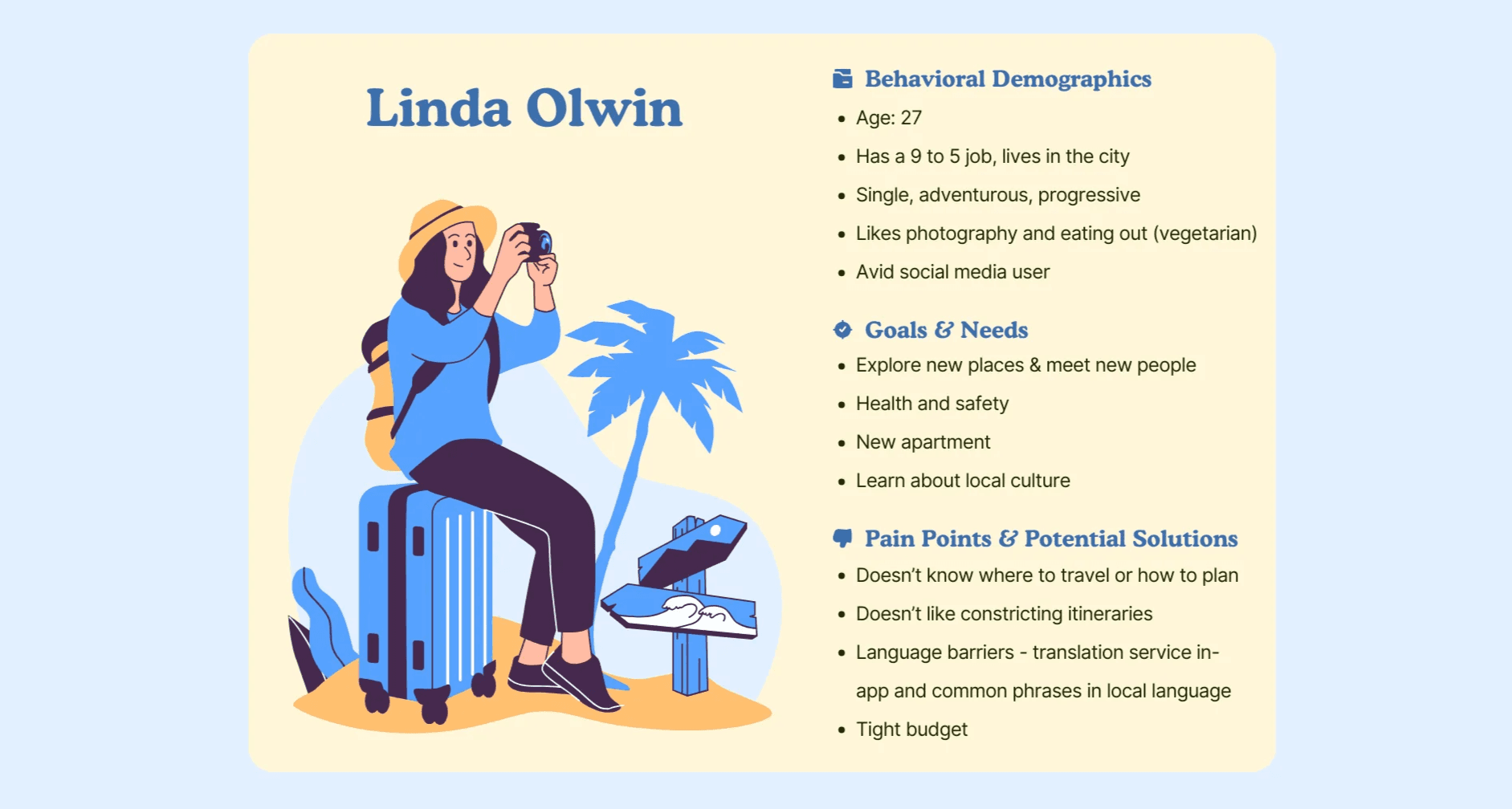
I began with interviews to understand the frustrations and priorities of post pandemic travelers, then synthesized responses into an affinity diagram to identify recurring themes. From there, insights led to a research backed user persona, and mapped the user journey to find pain points and opportunities.
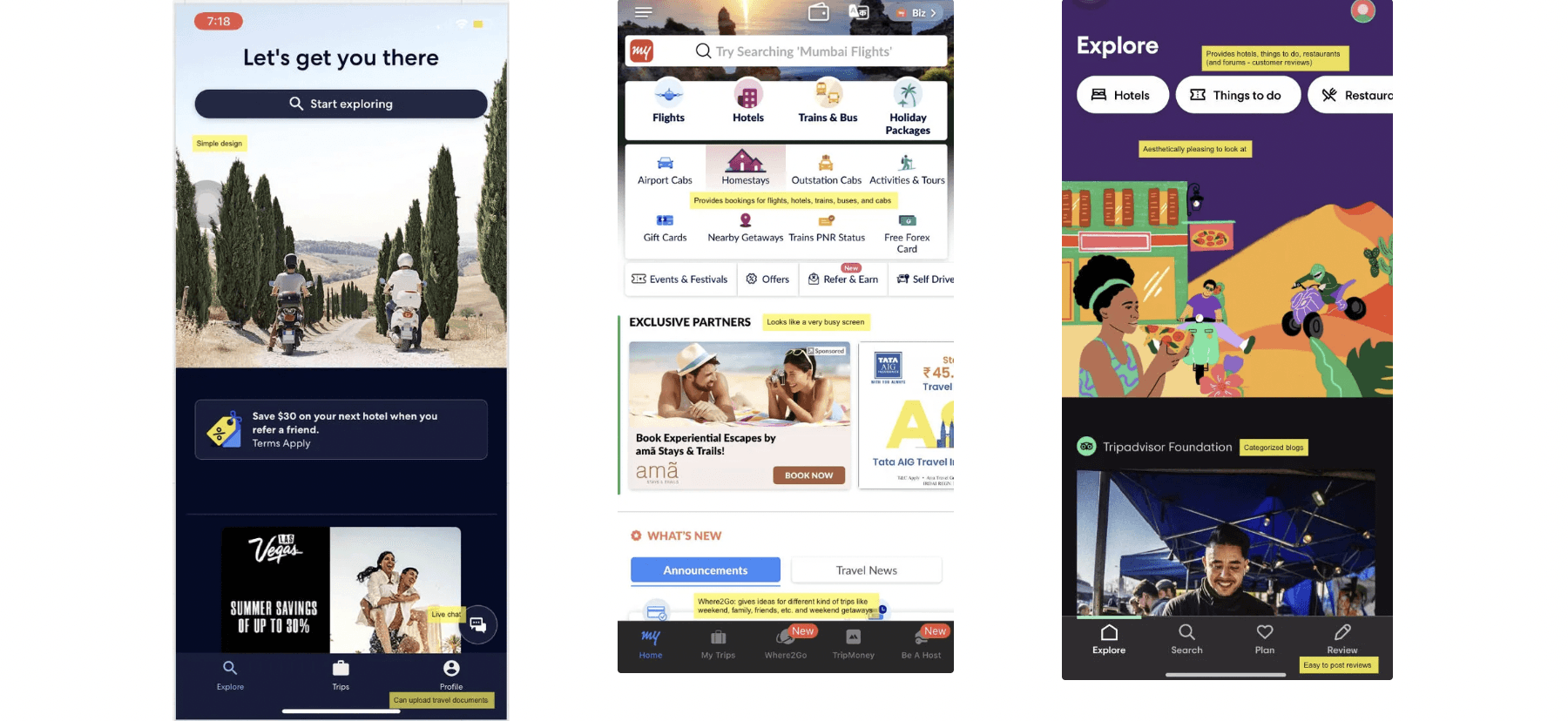
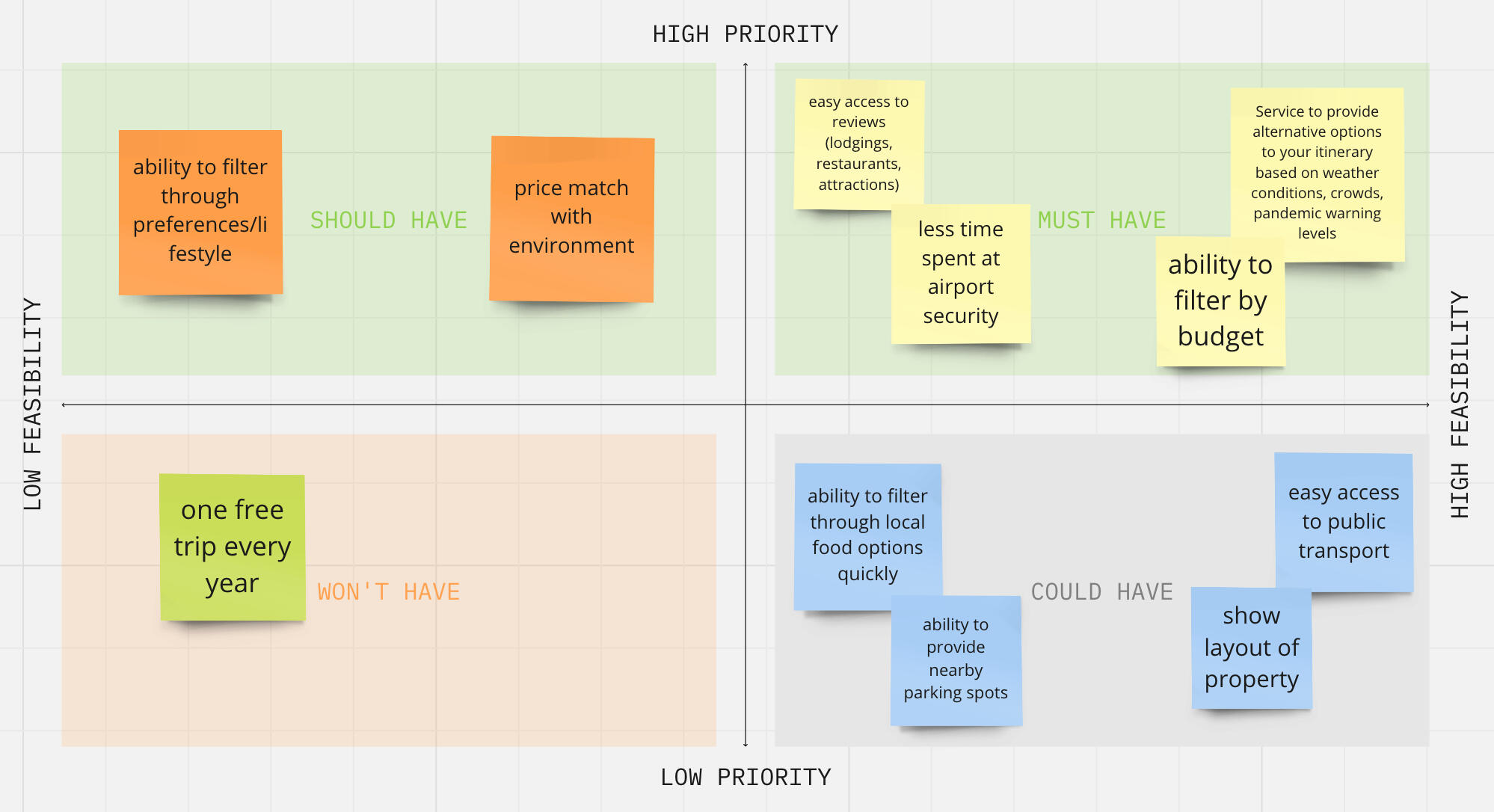
To define scope, I conducted an "I like, I wish, What if" brainstorming exercise, followed by iterations of key sentences such as the "trilla for EV" section, using competitor and inspiration exploration. Testing revealed sample pain points around booking and travel disruptions, leading me to a feature prioritization exercise that organized ideas into must have, should have, could have, and won't have categories.
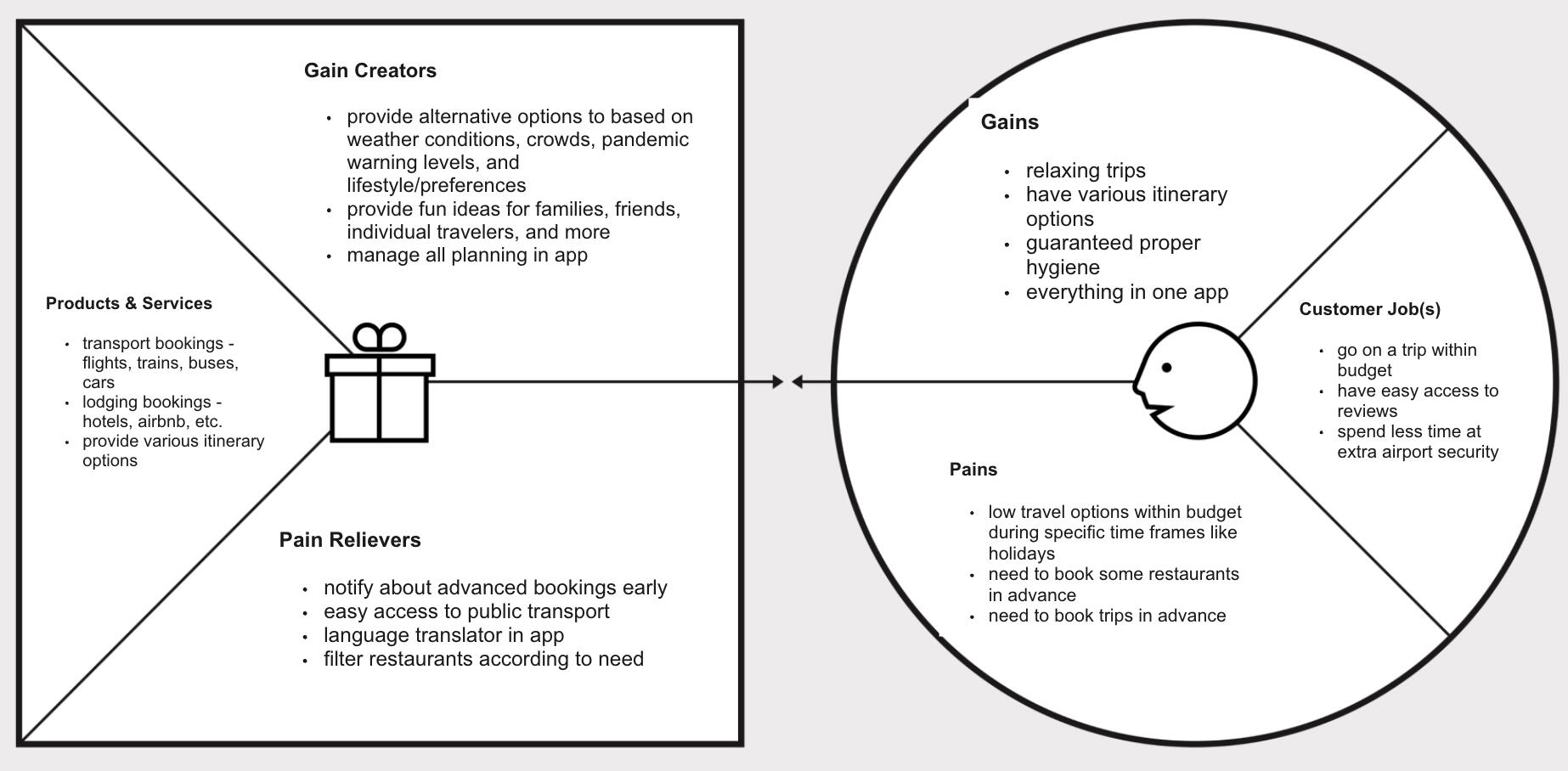
A value proposition canvas kept the design grounded in what would actually differentiate Smile Travel: comprehensive trip planning (booking, transport, activities) with personalized recommendations, all in a single app, versus fragmented booking flows on other platforms.
I mapped a user flow around a core traveler journey, from research to booking multiple services, ensuring clarity in navigation and payment processes. Paper wireframes let me sketch and merge the best elements into a more refined design before moving to high fidelity.
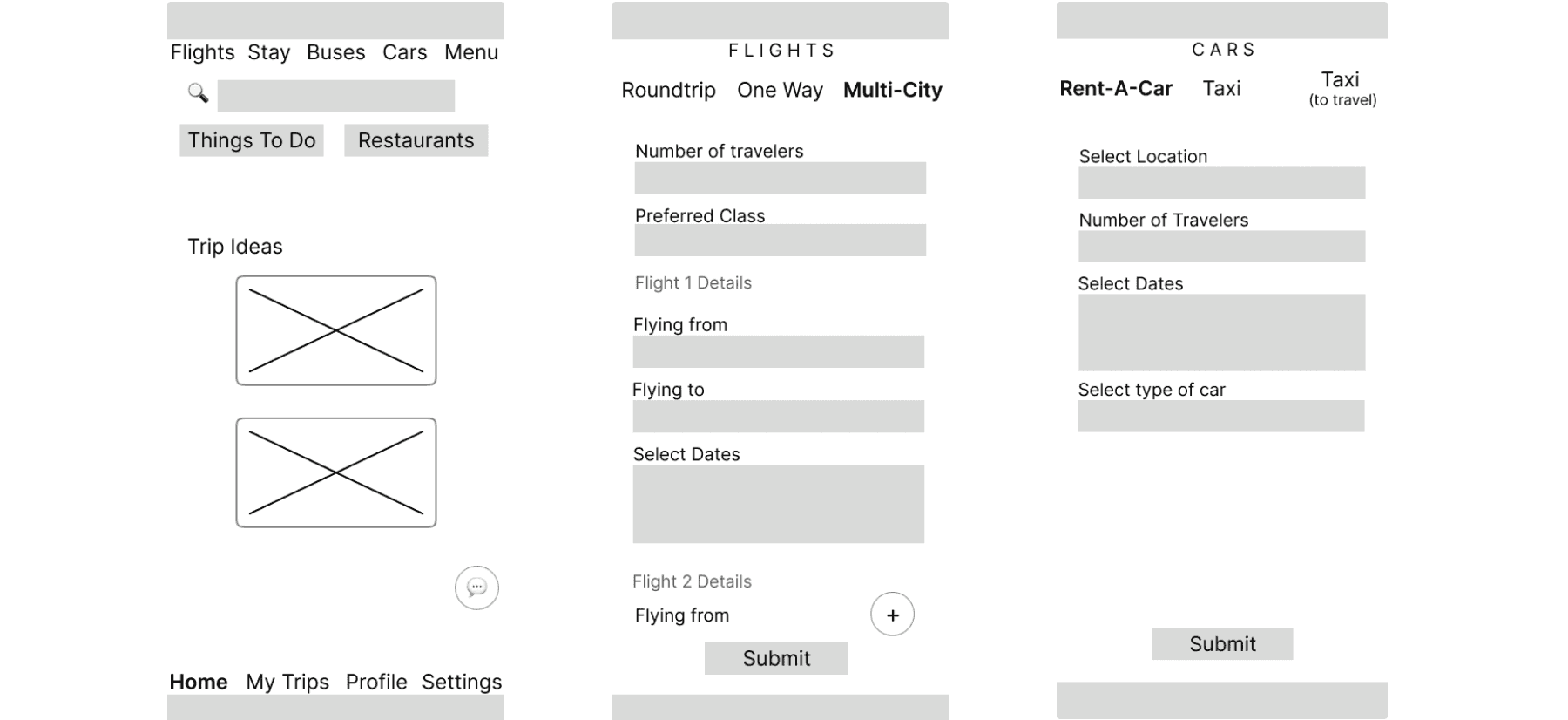
Guerrilla testing with five participants surfaced real usability issues, particularly around booking flow clarity and how easily people could complete a reservation. Based on that feedback, I iterated the design across two rounds, improving search and core booking tools first, then simplifying checkout with an "add to cart" style flow that reduced cognitive load and made the process feel more intuitive.
Reflection
What testing taught me
This project reinforced how valuable it is to validate assumptions early. Through research and user feedback, I became clear that prioritization and simplicity mattered most, leading me to focus on features that delivered the greatest value.
Going into user testing, I set out to validate the mid fidelity prototype, add an onboarding tutorial for first time users, and refine time sensitive info like delays, weather changes, and other disruptions. Those enhancements, along with continued support for Smile Travel's purpose, are what keep me thinking about the planning process as seamless and stress free as the journey itself.